
Some of the common interest terms ask companies to pay interests every six months. A company is required to keep an account of all the interests paid to the lender and the outstanding amount that is yet to be paid. When a company accrues interest, it debits interest expense and credits interest payable. When a company makes a payment on the principal balance and interest, it debits notes payable, interest expense and interest payable and credits cash. In contrast, accounts payable is essentially a company’s credit account with its suppliers. When a company purchases goods or services from a vendor and agrees to pay later rather than with immediate cash, that amount is recorded in accounts payable.
Understanding the difference between accounts payable and notes payable is essential to keep your business operations running smoothly. When invoices for items purchased on credit are entered into your accounting software application, a debit is made for the respective expense, while the accounts payable account is credited. For the same amount of money, accounts payable must be paid back quickly while notes payable are paid over a longer period with clearer terms and consequences. The consequences of notes payable default are outlined in the promissory note or other documentation. Any debts categorized as notes payable are often accompanied by a promissory note. The promissory note is the written agreement with the terms and conditions of the debt clearly defined.
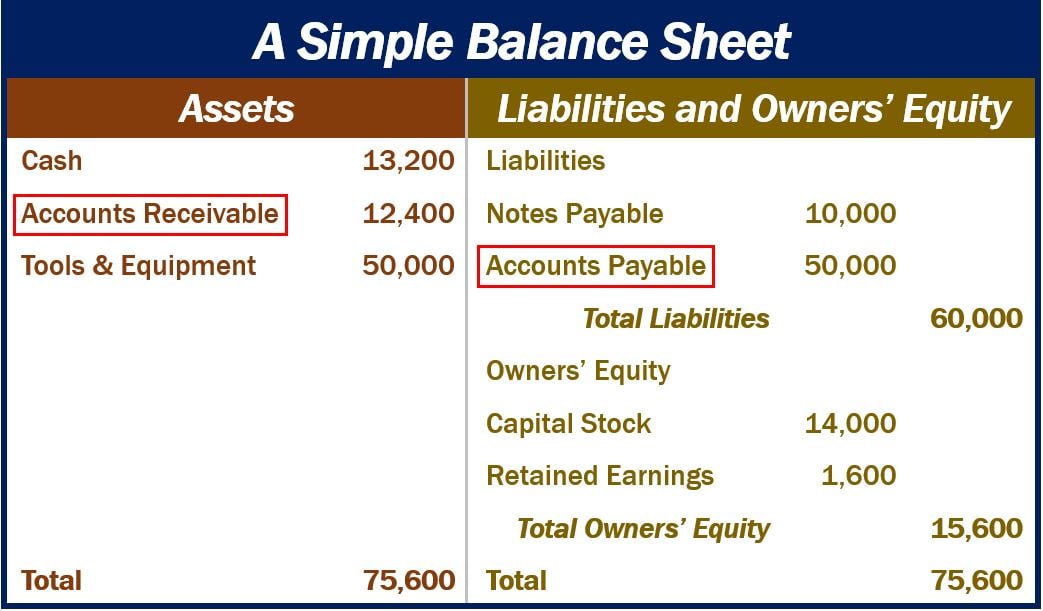
By knowing the differences between notes payable and accounts payable—and learning to leverage each correctly— you can improve your cash flow and grow more effectively. Pair this with a robust P2P platform, and you’ll be set to optimize your finance function and further accelerate success. To learn more about leveraging financing and putting procure-to-pay to work in your procurement practice, watch our on-demand Finance and Automation webinar. Accounts payable and notes payable are liabilities recorded as journal entries in a general ledger (GL) and on the company’s balance sheet. Accounts payable are short-term liabilities meaning they must be paid back within a year of the debt being accrued.
Here are some practical examples to illustrate the differences between the two. You create the note payable and agree to make payments is notes payable the same as accounts payable each month along with $100 interest. Interest rates on notes payable are usually negotiated between the borrower and the lender.
A retail store will use accounts payable to manage its short-term debts to suppliers for inventory purchases. But that same store might take out a note payable to finance a storefront renovation or expansion into a new location. Many people use the terms AP and NP interchangeably, but there are some stark differences between the two. Accounts payable refers only to short-term liabilities, but notes payable can represent either short-term or long-term liabilities and is contingent upon due dates and terms summarized within the note. An often-overlooked aspect of accounts payable is the role it plays in managing working capital, through the ability to time payments.
A notes payable is effectively a loan agreement, containing information related to payment deadlines and interest rates. NPs are recorded in the general ledger to ensure debts are repaid in full accordance with the agreement. Notes payable involves a more formal loan agreement, usually with a bank or lending institution. The company signs a promissory note, which is a legal document outlining the terms of the loan—including the principal amount, interest rate, and repayment schedule. Notes payable is typically used for larger financing needs and tend to have longer repayment terms than accounts payable, extending into months or even years. Accounts payable is that money which the business has to pay back to its vendors or suppliers due to credit purchase of goods and services.
Yes, this can happen if a company is unable to pay an outstanding invoice within the agreed-upon terms with a vendor. By converting to notes payable, the company formalizes the debt and negotiates a new repayment schedule with the vendor, including interest. Both accounts payable and notes payable share the common aspect of being payable in nature, meaning they involve debts that a company must pay to settle its obligations.
By the end of the loan term, ABC Manufacturing will have fully repaid the $100,000 principal plus accrued interest, completing the note payable obligation. This borrowed cash is typically used to fund large purchases rather than run a company’s day-to-day operations. Accounts payable and notes payable serve different purposes within a business, so let’s look at some real-life examples.
As such, they are often confused with being the same but are fundamentally different from each other. A three-way match occurs when a good receipt is involved and linked to the purchase order and invoice. With this added process step, you know that the order was accurate and that the goods were received. Many businesses operate across several sites and via separate departments that replicate similar activities. It is common for the same goods and services to be needed by these separate departments and sites.